



































- Home
- Super Strong Magnets +20kg Pull
Super Strong Magnets +20kg Pull
(97 Products)


Super Strong Magnets +20kg Pull
Pull-Force Comparison Guide
Pull force can vary significantly depending on a magnet’s size, shape, grade, housing and contact conditions. As a general rule, larger magnets, higher grades and steel-backed pot assemblies usually achieve higher pull-force figures than open magnets of similar size.
| Typical Magnet Size | Shape / Format | Typical Material | Typical Pull Force (kg) | Best For |
|---|---|---|---|---|
| 25mm dia x 8–20mm | Pot / hook / eyebolt | N42 Neodymium | 20–28.5kg | Compact hanging, clamping and holding |
| 30mm dia x 10mm | Disc | N52 neodymium | 24kg | High strength in a compact disc format |
| 40–50mm dia | Disc / countersunk / pot | Neodymium | 30–55kg | Workholding, mounting and fixtures |
| 50mm x 50mm x 10mm | Block / rectangular | N42 neodymium | 50kg | Flat-surface holding and fabrication |
| 48–60mm dia | Clamping / pot magnet | Neodymium | 80–139kg | Heavy-duty holding, retrieval and industrial use |
| 75mm dia x 15mm | Pot magnet with eyebolt | N42 neodymium | 200kg | Recovery, lifting assistance and secure fixing |
| 100–125mm pot assemblies | Pot / limpet / industrial assembly | Ferrite or neodymium | 55–130kg+ | Large-area holding and high-temperature tasks |
| 116mm dia x 20–32mm | Pot magnet with eyebolt | N42 neodymium | 400kg | Maximum holding performance in heavy-duty applications |
The figures above are intended as a quick comparison guide. Actual holding performance depends on the steel surface, coating, air gap, pull direction, temperature and whether the magnet is being pulled directly away from the surface or subjected to sliding force.
Super Strong Magnets for Industrial Holding
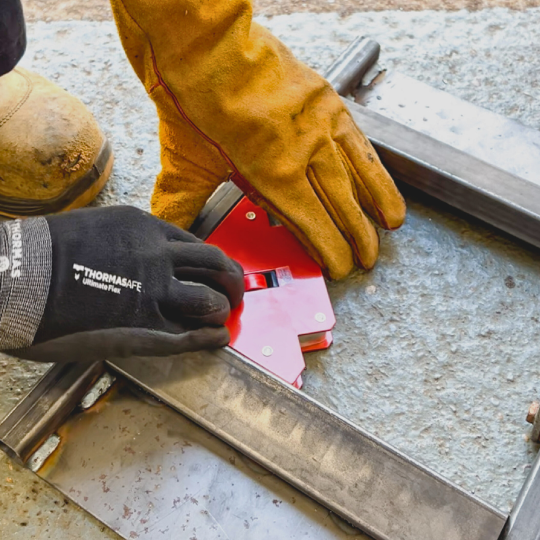
In industrial environments, super strong magnets are used for temporary fixing, holding steel components in place, securing access panels, jigs, fixtures, mounting systems and retrieval tasks. Neodymium pot magnets are especially popular because the steel cup helps focus the magnetic field for stronger direct pull. For production lines, fabrication, engineering and manufacturing, choosing the right shape matters just as much as choosing the right pull strength.
If you need flat-face contact against steel, browse our rectangular magnets. If you need compact round formats for mounting or clamping, view our circular, disc and rod magnets. For customers who need the most powerful magnetic grade available, our N52 grade neodymium magnets are the best place to start.
Super Strong Magnets for Workshop & Garage
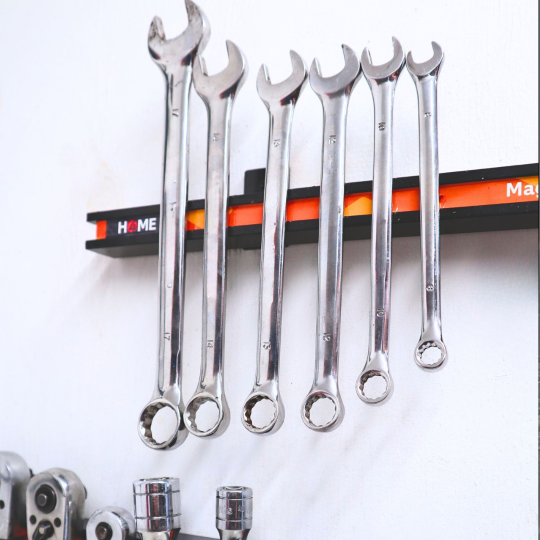
In workshops and garages, high pull-force magnets are useful for tool holding, temporary storage, securing guards or covers, keeping parts accessible during assembly and creating removable fixtures without drilling. Pot magnets with hooks, studs or eyebolts are often the easiest choice because they can be fitted into practical holding systems quickly.
Workshop users often need a balance between strong pull force and controlled handling. A magnet that is too strong for the job can be awkward to remove, while one that is too small may slip if the contact surface is dirty, painted or uneven. For general workshop applications, it is usually wise to choose a magnet with extra capacity in reserve rather than relying on the exact rated figure.
Super Strong Magnets for Outdoor & Marine Use
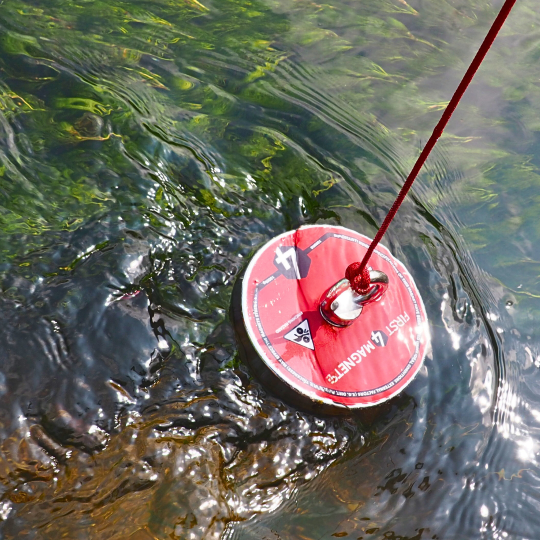
Outdoor and marine applications can be much harsher on magnets than indoor use. Moisture, salt spray, dirt, paint layers and uneven steel surfaces can all reduce real-world holding performance. For these environments, coated assemblies, rubber-coated options and enclosed pot magnet designs can be better suited than bare magnets, especially where surface protection or extra grip is important.
If your application involves exposed magnets, corrosive conditions or public-facing installations, always review our magnet safety information before use. Choosing the correct magnet construction is just as important as choosing the correct pull force.
How Pull Force is Measured
Pull force is the amount of force required to separate a magnet from a thick, flat steel plate when the magnet is in full, direct contact and the force is applied straight off the face of the magnet. This is a best-case measurement taken under controlled conditions, so it should be treated as a maximum direct-pull figure rather than a guaranteed real-world working load.
In practice, the stated pull-force figure assumes:
- A thick steel test plate capable of absorbing the magnetism fully- A clean, smooth and flat contact surface
- Full face-to-face contact with no air gap
- A steady pull applied perpendicular to the steel surface
Real-world pull force is often lower when there is paint, rust, dirt, curvature, thin sheet metal, vibration or an angled load. This is why a 20kg pull magnet may not always reliably hold a 20kg object in every application. Where safety matters, always build in a generous safety margin and select a magnet with more holding power than the minimum requirement.
Frequently Asked Questions
What is the strongest magnet I can buy?
For most commercial applications, neodymium magnets are the strongest permanent magnets you can buy. Within that category, higher grades such as N52 grade neodymium magnets are typically chosen by customers who want the highest available magnetic performance. However, the “strongest” option also depends on shape, size and magnetic circuit design, not just grade alone.
How is magnet pull force measured?
Magnet pull force is measured by pulling a magnet directly away from a thick, flat steel plate under ideal conditions. The test is performed with full contact, a clean surface and a straight, perpendicular pull. The result is usually shown in kilograms as a maximum direct-pull figure.
Are super strong magnets dangerous?
Yes, super strong magnets can be dangerous if handled incorrectly. They can snap together unexpectedly, pinch skin, chip on impact and affect pacemakers, tools or nearby electronic devices. Larger neodymium magnets should always be handled carefully and kept away from children. Please read our health and safety information before use.
What is the difference between pull force and shear force?
Pull force refers to the force needed to pull a magnet straight away from a steel surface. Shear force refers to the resistance to sliding the magnet sideways across that surface. In many applications, a magnet’s shear resistance is much lower than its stated pull force, which is why load direction matters so much.
What shape magnet is the strongest?
There is no single strongest shape in every situation. Pot magnets often deliver extremely high direct pull because the steel housing concentrates the magnetic field. Disc and block magnets can also be very strong, especially in larger sizes and higher grades. The best shape depends on the available mounting space, contact area and direction of load.
Can super strong magnets damage electronics?
Yes, super strong magnets can interfere with or damage certain electronics, magnetic storage media, sensors and instruments. Keep powerful magnets away from hard drives, magnetic stripes, speakers, measuring devices and any equipment that may be affected by strong magnetic fields.